

They blend humor, emotion, and lifestyle detail so the post stops the scroll, invites comments, and lifts engagement rate and visibility across Instagram feeds and reels.
Great wine captions do more than describe the drink.
They create a feeling, spark conversation, and make people hit save or share.
Below are twelve original frameworks packed with practical points you can use right away to grow your wine content.
Turning Everyday Sips Into Scroll-Stopping Stories 🍷

- Open with a tiny personal detail that makes the glass feel like a real moment instead of a staged product shot.
- Name the exact time of day so the caption feels grounded and easy to picture.
- Pair the wine with one non-wine object in the frame to create a mini scene that viewers can step into.
- Use a single sensory word early so the reader immediately tastes or smells the post.
- End the first sentence with a soft question that invites quiet reflection rather than a loud reaction.
- Keep the story arc under three short lines so it fits cleanly under a reel or photo.
- Reference a small daily ritual that most people recognize, then elevate it with the wine.
- Avoid listing grape varieties unless the photo already shows the label clearly.
- Write the caption as if you are speaking to one close friend rather than a broad audience.
- Test two versions of the same story on consecutive days and note which earns more saves.
- Leave one emotional beat unfinished so the viewer feels the urge to comment and complete it.
- Track how story-style captions affect profile visits compared with pure joke captions.
Matching Caption Tone to Wine Color and Mood 🍇
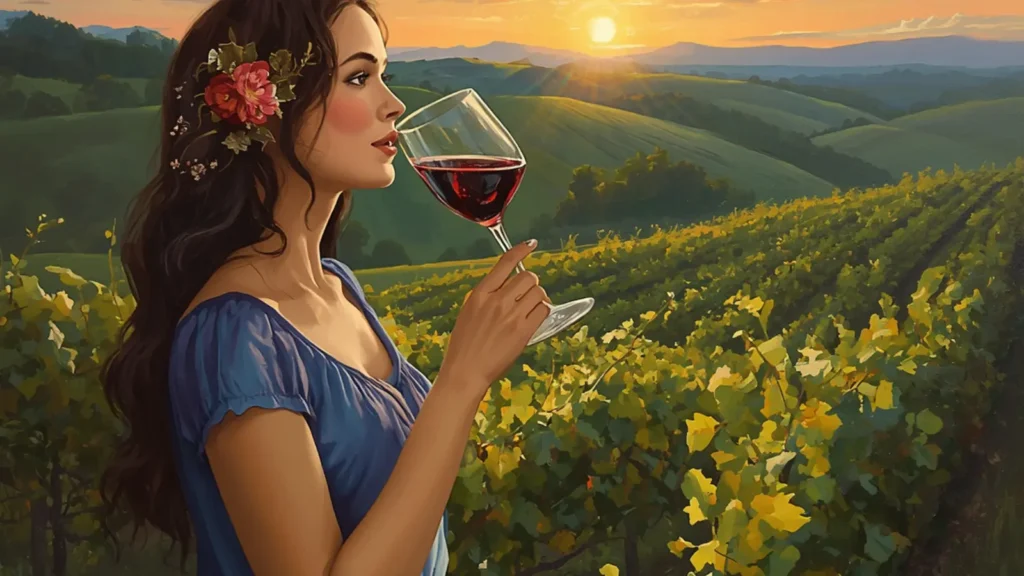
- Let red wines carry warmer, slower language that mirrors their deeper color and body.
- Give white wines lighter, brighter verbs that feel crisp and refreshing on the tongue.
- Match rosé captions to playful, slightly flirtatious phrasing that matches the color’s easy charm.
- Use sparkling wine captions that feel celebratory without becoming overly loud or forced.
- Adjust sentence length so heavier wines get longer, more reflective lines.
- Choose emoji that echo the color of the pour for instant visual harmony.
- Soften the tone when the photo shows a quiet solo moment and raise energy for group settings.
- Avoid mixing high-energy words with a calm, low-light photo of a still glass.
- Read the caption out loud while looking at the image to check emotional alignment.
- Create a simple color-to-tone reference sheet so future captions stay consistent.
- Notice which color-mood pairs produce the highest engagement rate over a two-week period.
- Rotate tones deliberately so your feed never feels stuck in one emotional register.
Building Anticipation With Pre-Pour Tease Lines ⏳

- Start the caption before the wine is even poured so the viewer waits with you.
- Describe the sound of the cork or the first glug without showing the liquid yet.
- Name the reason the bottle is being opened so the moment feels intentional.
- Use future-tense verbs that keep the experience slightly ahead of the viewer.
- Drop one small detail about the setting that makes people lean in for more.
- Keep the tease under two sentences so curiosity stays high rather than frustrated.
- Pair the text with a short reel that ends just before the pour for maximum tension.
- Avoid revealing the wine name until the second or third line.
- End with a soft invitation for the viewer to imagine their own glass.
- Test pre-pour captions against immediate-pour captions and compare comment volume.
- Save the strongest teases for weekends when people have more time to engage.
- Archive the lines that consistently raise visibility so you can reuse the structure.
Layering Sensory Words That Make Viewers Taste the Post 👃

- Choose one primary sense for each caption and build around it instead of listing every note.
- Place the strongest sensory word in the first half of the caption for early impact.
- Combine temperature with texture so the glass feels real in the reader’s hand.
- Use verbs that describe movement of the liquid rather than static adjectives.
- Limit yourself to three sensory details so the caption stays clean and focused.
- Match the sensory language to the lighting in the photo for cohesive storytelling.
- Replace generic words like “delicious” with specific ones that only wine drinkers understand.
- Read the caption while holding an imaginary glass to check whether the words land.
- Notice which sensory combinations earn the most saves from your audience.
- Create a private list of your favorite sensory phrases and rotate them carefully.
- Soften sensory language for daytime posts and intensify it for evening content.
- Pair sensory captions with hashtags that also lean into taste and smell themes.
Crafting Captions That Spark Conversation in Comments 💬
- End with an open-ended question that only people who love wine can answer fully.
- Share a mild preference and invite others to agree or disagree politely.
- Mention a common wine dilemma and ask how followers handle it.
- Use “you” language so the question feels personal rather than broadcast.
- Keep the question soft enough that shy followers still feel safe replying.
- Reply to every early comment within the first hour to signal that conversation is welcome.
- Avoid yes-or-no questions that end the discussion before it starts.
- Reference a seasonal moment so the question feels timely and relevant.
- Test question-style captions against statement-style captions and measure reply depth.
- Pin a thoughtful comment to the top to model the kind of conversation you want.
- Notice which questions produce the longest comment threads and reuse the structure.
- Track how conversation-driven captions affect overall engagement rate week to week.
Timing Caption Energy for Peak Reel Performance 🎬
- Match high-energy captions to reels posted during evening scroll hours.
- Save quieter, reflective captions for early morning or late-night posts.
- Align caption length with reel length so neither overpowers the other.
- Place the strongest line near the moment the wine appears on screen.
- Use shorter sentences for fast-cut reels and longer ones for slow pours.
- Test the same caption on a static post and a reel to see where it performs better.
- Post reels with anticipatory captions just before people typically unwind.
- Avoid dense text on reels that already carry strong visual storytelling.
- Watch the first three seconds of engagement and adjust future captions accordingly.
- Keep a simple calendar of your best-performing reel times and caption styles.
- Notice how caption energy influences average watch time on wine reels.
- Rotate energy levels so your reels never feel repetitive to the algorithm or the audience.
Using Subtle Humor Without Diluting the Wine Experience 😂
- Aim for a gentle smile rather than a loud punchline that steals focus from the glass.
- Base the joke on a shared wine moment most drinkers have lived through.
- Keep the humor in the second half of the caption so the wine still leads.
- Avoid self-deprecating lines that make the wine feel secondary.
- Test humor on Stories first to gauge reaction before using it on the main feed.
- Pair light jokes with elegant photos so the tone stays balanced.
- Use understatement instead of exaggeration for a more sophisticated laugh.
- Read the caption to a friend who loves wine and watch their face.
- Track which humorous captions earn the most shares versus pure aesthetic ones.
- Limit joke captions to one or two per week so they stay special.
- Soften any humor that risks sounding snobby or exclusive.
- Notice how subtle humor affects long-term engagement rate compared with serious captions.
Connecting Wine Moments to Broader Lifestyle Narratives 🌿
- Link the glass to a small daily ritual that feels bigger than the drink itself.
- Tie the wine to a season, a city, or a personal milestone without oversharing.
- Show how the wine fits into a larger evening or weekend plan.
- Use lifestyle language that makes non-wine drinkers still feel included.
- Keep the connection light so the post never feels like a lecture.
- Pair lifestyle captions with photos that show more than just the bottle.
- Reference common life transitions that many followers recognize.
- Avoid forced connections that stretch the wine moment too far.
- Test lifestyle captions against pure wine-focused ones and compare reach.
- Build a short list of lifestyle themes that feel authentic to your feed.
- Notice which broader narratives bring new followers from outside the wine niche.
- Evolve the lifestyle links as your own life and audience change over time.
Selecting Hashtag Sets That Expand Beyond Wine Circles 📈
- Mix three core wine hashtags with five broader lifestyle or mood tags.
- Include one location-based tag when the photo shows a recognizable place.
- Rotate hashtag sets every few posts so the algorithm sees variety.
- Research which mid-size hashtags still have active, engaged communities.
- Place hashtags in the first comment if you prefer a cleaner caption look.
- Avoid the most saturated wine tags that bury new posts instantly.
- Test one experimental hashtag each week and track the resulting visibility.
- Create three ready-to-use hashtag groups for different content moods.
- Monitor which hashtag combinations bring the highest quality comments.
- Remove any hashtag that consistently attracts spam or irrelevant traffic.
- Pair hashtags with strong captions so the text still carries the post.
- Review hashtag performance monthly and refresh the sets that underperform.
Measuring Caption Impact Through Save and Share Patterns 📊
- Check save counts within the first 24 hours to gauge immediate resonance.
- Compare share numbers across different caption styles for the same type of photo.
- Note which captions lead to the most profile visits after the post.
- Track engagement rate specifically on wine posts versus other content.
- Look at comment quality rather than just quantity for deeper insight.
- Create a simple spreadsheet that logs caption type, save rate, and share rate.
- Identify the caption structures that consistently outperform the account average.
- Revisit older posts that still earn saves and reverse-engineer their language.
- Adjust future captions based on patterns rather than single-post results.
- Share your own measurement insights occasionally to build transparency with followers.
- Notice seasonal shifts in which caption styles earn the most saves.
- Use the data to decide which of the twelve frameworks deserve more of your time.
Adapting Caption Length Across Feed Posts and Stories 📱
- Keep feed captions slightly longer when the photo needs context.
- Shorten Stories captions so they can be read in a single glance.
- Use line breaks in feed posts to create natural reading pauses.
- Test the same idea in both long and short form and compare results.
- Save the most poetic lines for carousel posts that give extra space.
- Make Stories captions feel like a quick spoken thought.
- Avoid repeating the exact same caption across both formats.
- Notice how length affects completion rate on multi-image posts.
- Adjust length based on the complexity of the wine being shown.
- Create templates for three different length ranges you use often.
- Track whether longer captions improve or reduce overall visibility.
- Refine length habits every month as your content mix changes.
Evolving Your Caption Voice as Your Audience Grows 🌱
- Review your earliest wine captions once a quarter to see how far your voice has come.
- Notice which phrases your long-time followers still respond to most strongly.
- Introduce new vocabulary slowly so the shift feels natural rather than abrupt.
- Ask occasional open questions about what kind of captions people enjoy most.
- Keep a private note of phrases that feel outdated and gently retire them.
- Let successful new experiments become permanent parts of your style.
- Balance consistency with freshness so the feed still feels like you.
- Watch how newer followers react differently from older ones to the same tone.
- Adjust formality levels as your community becomes more familiar.
- Celebrate small voice evolutions by sharing a before-and-after example.
- Protect the core warmth of your captions even as the style matures.
- Treat caption evolution as an ongoing conversation with both your audience and your own taste.
Wine Instagram captions work best when they feel like a real person sharing a real glass.
The twelve frameworks above give you structure without forcing you into a single rigid style.
Use them to raise engagement rate, improve reels visibility, and turn casual viewers into people who look forward to your next pour.
Pick one framework this week, write three captions with it, and watch how your audience responds. Then come back, refine, and keep building.
Your next great wine caption is only a sip away go write it and share the moment. 🍷

A creative voice crafting catchy captions and meaningful words for every mood.